When Inexperience Becomes Influence: Jiya Binning Plays the Devil’s Advocate in Today’s Workforce
BEEDIE LUMINARIES — These days, SHINE Cohort 2023 Luminary Jiya Binning starts her mornings like many other UBC students: trekking through the rain, weaving between lecture halls, and treating herself to a Blue Chip cookie at The Nest. Now in her third year, her routine is familiar and grounded in campus life.
But just a few months ago, her days looked completely different. This past summer, Jiya took a leap into the unknown—moving across the country to Ottawa to work as a Junior Policy Analyst at Global Affairs Canada. Having graduated high school less than two years earlier, she found herself reflecting on the path she’s paved so far and what the experience has taught her.
In this candid, true-to-Gen-Z reflection, Jiya challenges a common career myth: that being “green” means doing grunt work or blending into the background at an organization where your manager doesn’t really remember your name. Instead, she powerfully argues the opposite—that being young and less experienced can be your greatest advantage.
Read her full piece below.
Hot take: Being the youngest and least experienced person in the room is the biggest advantage a young professional can wield.
It lets you notice what others overlook, ask bold questions no one else will, and flip the expected completely on its head.
My summer at Global Affairs Canada proved just that, teaching me that belonging doesn’t come from waiting for permission; it comes from daring to claim space in places no one expected you to be in.
When I first walked into Global Affairs Canada as a Junior Policy Analyst, I felt the weight of history in the building. The walls carried decades of decisions that had defined Canada’s role in the world, decisions that had ripple effects across borders, communities, and generations.

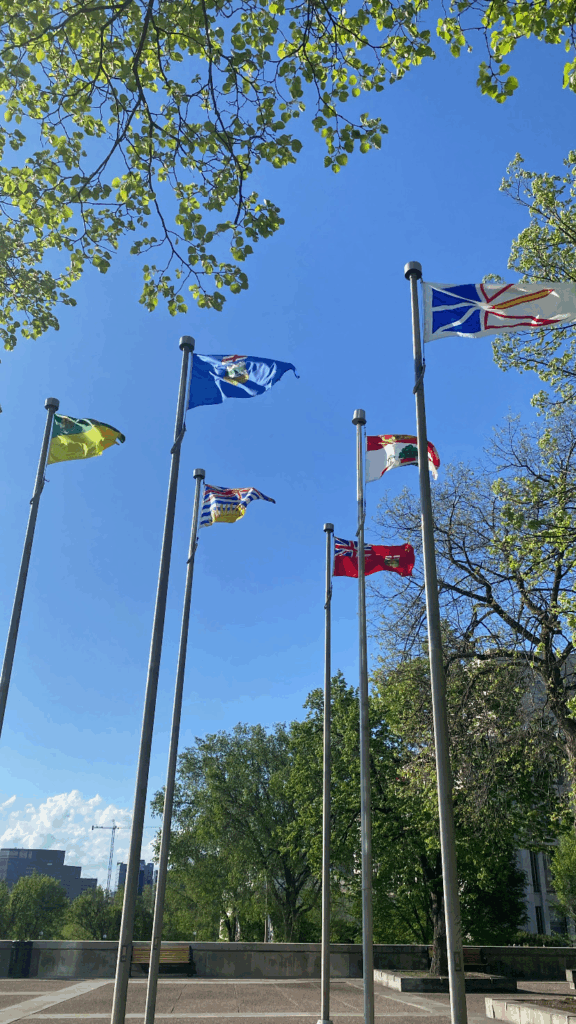
For a moment, I stood there acutely aware of how far I had come: I was the first undergrad my team had ever hired, the youngest in the building, surrounded by colleagues with master’s and doctoral credentials or decades of diplomatic experience. I was a Punjabi daughter of immigrants, the first in my family to step into this kind of space. It was surreal. And if I’m honest, terrifying. For a while, imposter syndrome became a daily ritual: Do I really belong here? Did they make a mistake choosing me?
But here’s the thing: being a first-generation student means you’re used to figuring things out without a roadmap. You learn to translate between worlds – between home, culture, school, and work. That adaptability became my superpower. It gave me the confidence to navigate federal systems, question long-standing processes, and contribute perspectives others might overlook.
My “inexperience” turned into insight. I wasn’t conditioned to see things the way they’d always been done — which made me the person to ask why.
By the end of my term, I wasn’t just learning about policy, I was shaping it. I prepared recommendations for the Minister of Foreign Affairs on some of the most sensitive global issues to strengthen Canada’s response to international challenges.
My day-to-day was fast-paced and high-stakes. I reviewed shipments imported into and exported from Canada in collaboration with the Canadian Border Services Agency (CBSA) to ensure compliance with sanctions regulations. I also wrote detailed policy briefs that compared and contrasted sanctions regimes, identifying overlaps, gaps, and inconsistencies that shaped Canada’s broader foreign policy decisions. Over time, those analyses turned into strategic recommendations presented to senior management.
Eventually, my supervisors entrusted me with projects that required independent judgment, the kind you usually only get after years in the field. I authored memoranda to the Minister, co-wrote decision rationales, and designed a Permit Rationale Tracker – a live internal tool that documented the reasoning behind every sanctions permit recommendation dating back to 2016. It helped the Bureau track patterns, improve transparency, and make more consistent calls going forward.
That project taught me a lot about influence. It’s not about title or seniority; it’s about being the one who sees a problem and decides to fix it. It’s about curiosity, clarity, and courage. And it’s about not waiting until you’re “experienced enough” to contribute something meaningful.
But the real heart of the experience? The relationships.
One of my favourite memories was getting a mani-pedi with my manager after work. We talked about everything – impostor syndrome, career paths, and what it means to be young, ambitious, and trying to hold space in rooms that weren’t built for you. From this to the debriefs with my boss about my trip to New York City, the too-many clothes I bought, and the cute guys I saw in cafés between museum visits – those moments reminded me that Gen Z isn’t just entering the workforce. We’re redefining it.
We’re proving that professionalism doesn’t have to mean perfection. That you can be serious about your goals and still be human, still laugh, still live, still bring your whole self into every space you walk into.
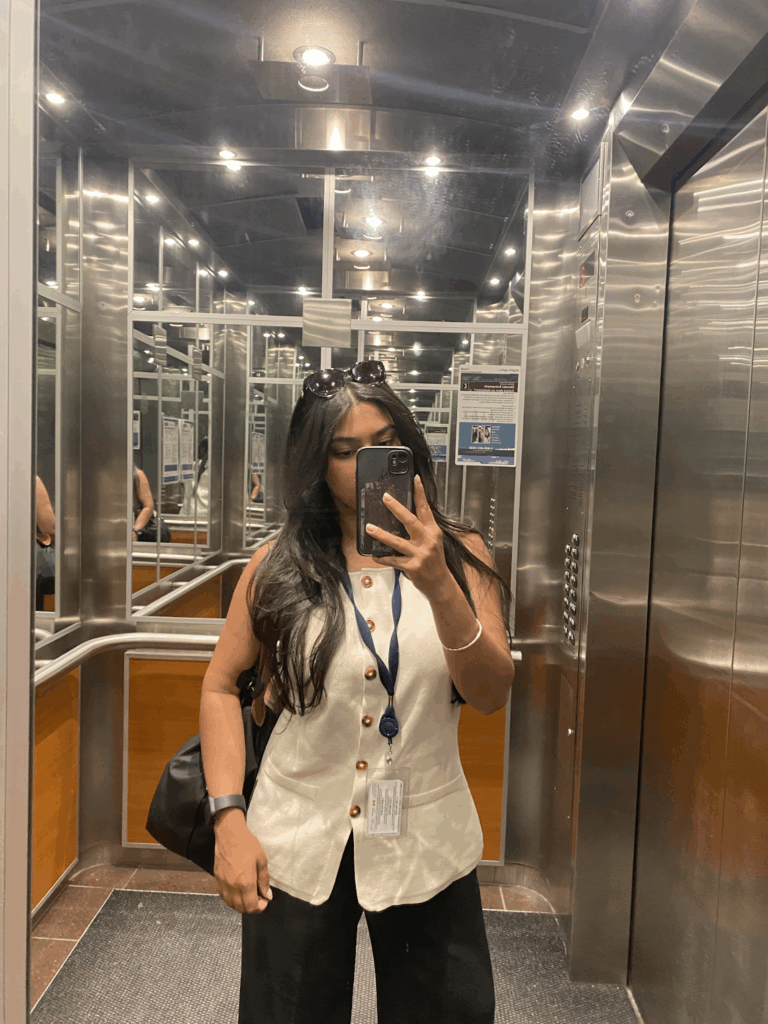

For me, that’s what leadership looks like. It’s not about titles or years of experience. It’s about presence, courage, and care. Many times, I was the only racialized woman in the room, but that pushed me to speak up, ask better questions, and make sure the conversations happening at the table reflected the realities of the people outside of it.
What I learned is that policy isn’t abstract. It impacts communities. It determines who gets heard and who gets left out. Representation matters not for optics, but because it shapes the stories we tell, the assumptions we challenge, and the futures we build.
Looking back, what once felt like a weakness, my age, my background, my lack of experience, became the reason I stood out.
Being the youngest in the room doesn’t make you less capable. It means you see what experience sometimes forgets to notice.
My generation, Gen Z, has grown up confronting climate crises, global inequality, and digital disconnection, all while navigating a new reckoning with equity, race, and inclusion. We’ve learned not to shy away from difficult questions or settle for surface-level answers. Carrying that mindset into every space I enter, I ask: Whose voices are missing? Whose futures are we building toward?
Experiencing this firsthand has shown me that belonging isn’t something granted – it’s something we create. It comes from claiming space, speaking truth to power, and working to ensure the doors remain open for those who follow.
And that? That’s where change begins.
You’re absolutely crushing it, Jiya! Until next time!
