Michael den Haan on Mentorship: Service, Hospitality, and Twenty Years of Showing Up
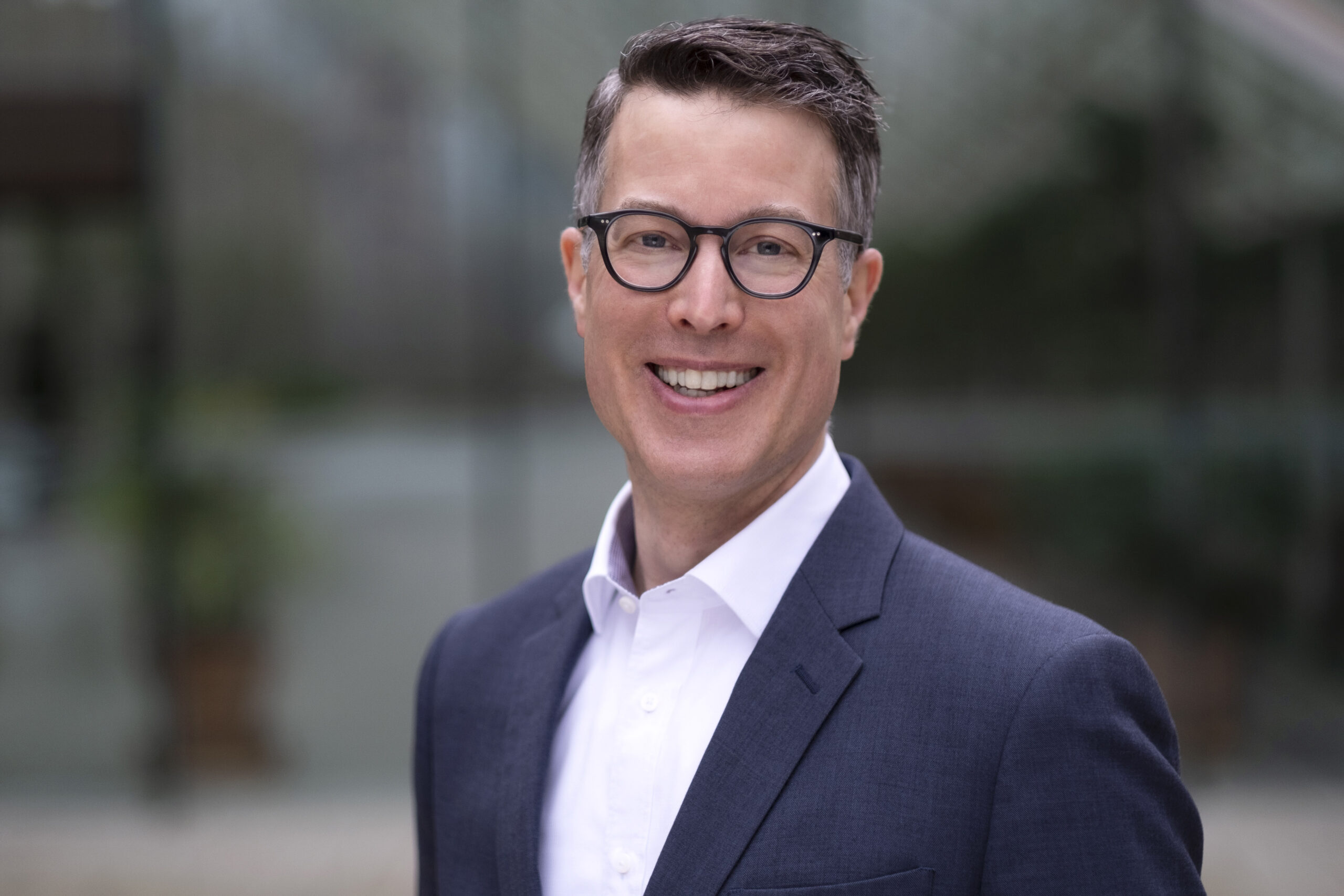
Some mentors measure success in career outcomes. For Michael den Haan, who was the mentor to alumna Sarra Pirmohamed for the duration of her undergraduate studies, success looks different.
Success happens in the space two or more people create together, built on trust, honesty, and the willingness to keep showing up, session after session, year after year.
As Vice President of Advancement at Lakehead University, Michael brings decades of leadership experience to his work. He lives about an hour and a half north of Toronto, in Orillia, with his wife and son and their two dogs. He also volunteers as Chair of the Board for Ecology Project International, an organization that empowers students through nature-based experiences and ecological literacy.
But when asked what really guides his life and work, he doesn’t point to his job title. He points to three words: service, hospitality, and curiosity.
Hospitality, he explains, traces back to growing up in a tight-knit Dutch subcultural community where we learned and practised “gezelligheid.” He references the Finnish word “fika,” used to describe the particular warmth of being at home, where one eats good food, conversation flows, and there is a sense that everything is wonderful and safe. Growing up, gezelligheid is what everyones aspired to, and yet growing up in a close first-generation Canadian community also meant navigating who was in and who was out. He reflects on this experience that he wrestled with for a long time.
In fact, that tension shaped a conviction he holds firmly today: real inclusion is about more than telling someone they’re welcome. It means building a space where people feel like they matter, where they can express doubt, push back, or say no, and still feel safe sharing an idea that might sound a little crazy. He lives this out in small ways too, like planning his family’s meals each season around what a local farmer produces, a practice he describes as life-giving, non-transactional, and vital.
That same hospitality carries over into curiosity, though it took him longer to embrace it. For a long time, he believed that asking too many questions made people uncomfortable. Eventually he realized the opposite was true for him. Without approaching daily life with curiosity and wonder, he felt suffocated. Over the years, curisoity has become explicit in his value system.
Service, the third of his values, goes back to how he was raised, taught early on to give back and look out for others. It’s engrained in his bones, he says, and it’s also what feeds him. That commitment to service is what first drew Michael into mentoring twenty years ago, and it’s what eventually led him to Beedie Luminaries, through his prior work with Ryan Beedie at Simon Fraser University. Having already mentored through another program at the University of Toronto, he could sense Ryan’s passion for the project right away. He calls his decision to mentor a “no brainer.”
He’s candid that he feels like he gains more than he gives. Watching a student move through the intense, formative years of university, a period he describes as an almost vertical growth trajectory, and getting to nudge that growth in small ways, is something he calls an honour and a privilege. Learning has always been central to his own life too, and for him, helping someone start their own learning journey is the real measure of doing his job well.
Asked to reflect on a defining moment in his career, Michael pushed back gently on the premise of the question. There isn’t one singular moment, he says, but many, often tied to career transitions, which he’s come to see as the moments where the deepest learning happens.
If he has to name one moment, though, it’s this: choosing to stand by someone who needed him, even when it meant being excluded by his community as a result. That choice cost him things that had felt comfortable and safe, but the relationship endured, and so did something in him. He compares it to training for a marathon: once the muscle is built, it’s easy to use, but getting there is hard. Enduring that exclusion is what built the muscle, and it remains deeply tied to how he understands hospitality, inclusion, and exclusion today.
That way of thinking shapes how Michael approaches mentorship more broadly, especially with young people facing adversity. His approach is rooted in mirroring. Each of us sees our own situation through a single, narrow perspective, which can be both clarifying and blinding, and he sees his job as helping people see the larger, more complex picture, both within themselves and around them. He also draws on Viktor Frankl‘s idea that our greatest freedom lives in the space between something happening to us and how we choose to respond. For him, mentorship is about giving a mentee as much information as possible, then trusting them with the autonomy to decide how to respond, while he witnesses that process without judgment.
All of this comes together in how Michael thinks about success with Sarra specifically. Not through a fixed set of metrics, he says, but as the space he and his mentee co-created together. While their mentor-mentee relationship formally concluded this past June, Sarra notes that “Mike’s mentorship was pivotal in getting me to where I am today and shaping me into the person that I am”.
The space they created for each other was one of flow, where Sarra felt safe and trusted her mentor enough to be honest, and where each conversation moved them toward some kind of learning or next step. In reflection, that space, Michael says, is held up by structure: clear boundaries, tools tailored to the individual, goal-setting worksheets, and regular check-ins.
Michael does not consciously track whether the mentorship is “successful.” The years of work they put into their mentor-mentee relationship speak for themselves. Now that Sarra has moved on to the next chapter of her life, and has become a mentor herself, he’s genuinely happy for her. “It signals she’s ready to launch in new directions,” he adds.
Still, the mentorship experience isn’t just about Sarra’s work life. Instead, Michael says it’s more about how she shows up in the world. There’s a tendency to wear a professional mask at work, but the most meaningful thing we can do, he believes, is bring our whole selves, our full humanity, into everything we do. He notes that somewhere along the way, especially after the pandemic, we as a society have lost touch with some of our humanity. Recapturing it is at the heart of his work, and he has no doubt that whatever Sarra pursues, she won’t just find success and happiness, but she’ll find fulfillment.
And that, he says, is where values come in.
That’s why connecting at a meaningful level is essential to mentoring, Michael explains. While some might call this “fluff”, Michael argues it’s the most important thing there is. Until we can access the truer, higher parts of ourselves, he says, we’ll never show up anywhere with our full potential. That’s his why.
Michael closes with real gratitude for the chance to be part of the program. It’s a fitting place to land for someone guided by service, hospitality, and curiosity. Over the years, he and Sarra built their entire relationship, this whole space of trust and growth, without ever meeting in person. “It’s a connection I still find remarkable and for which I’m deeply grateful”, he concludes.
Thank you, Michael.