Education has the power to change lives, but for too many bright, driven students, cost gets in the way of pursuing it. We believe finances shouldn't decide who gets to go further. That's why we're here.
Applications open November 2nd at 1PM (PST). Please review the 2027 Program Guidelines prior to starting your application.
Teaching Consent Across Cultures: What an International Field School in India Taught Mackenzie Packer About Social Work
BEEDIE LUMINARIES — Meet Mackenzie Packer, a 2023 SHINE Student and Bachelor of Social Work student at Thompson Rivers University.
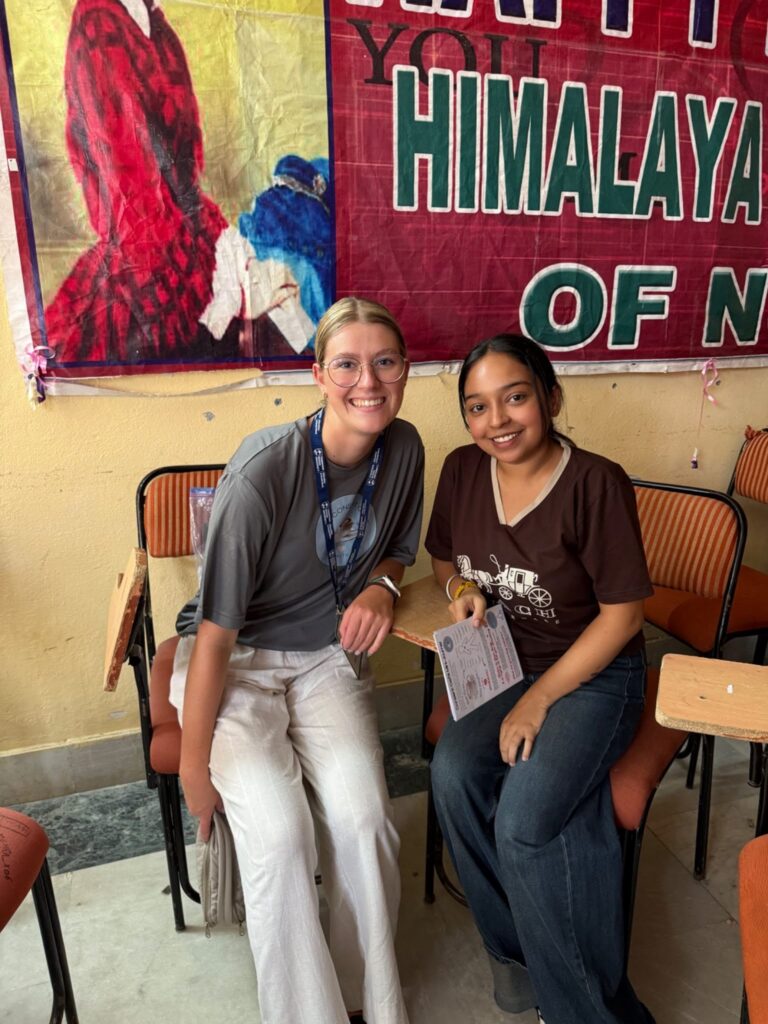
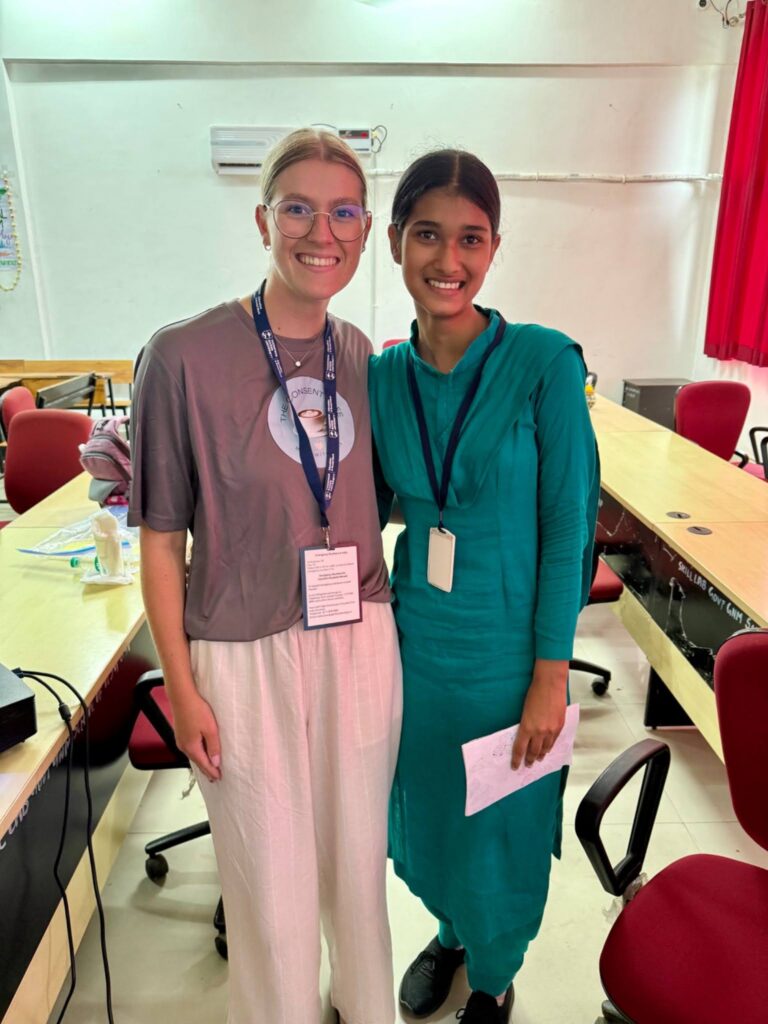
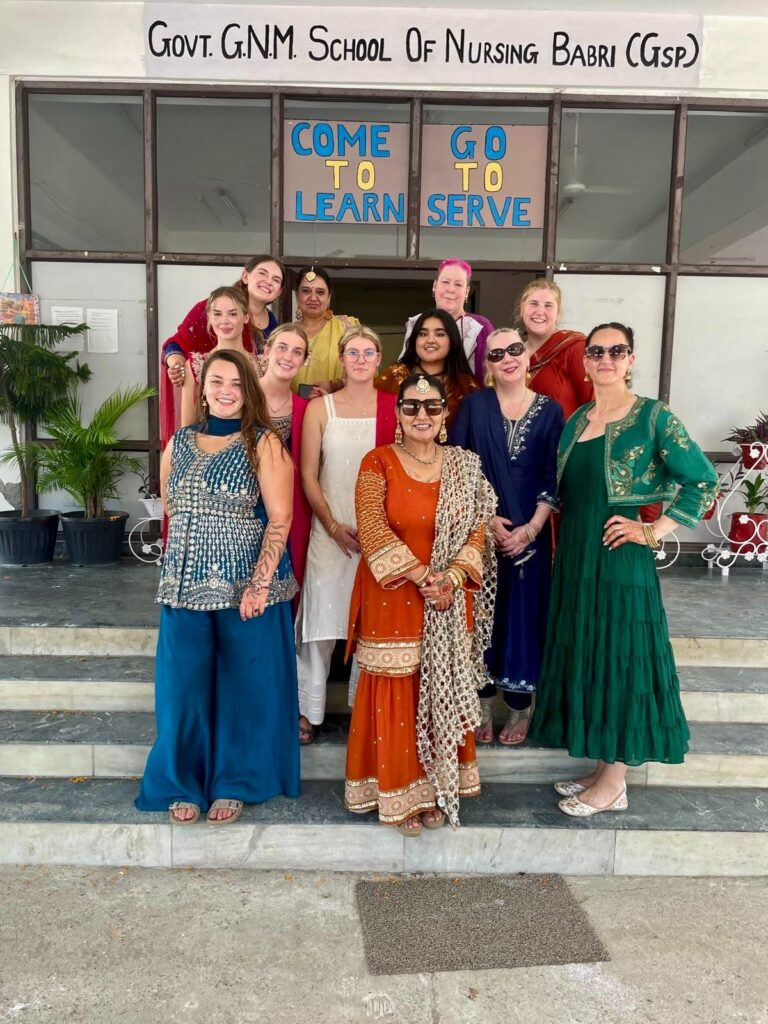
This summer, Mackenzie packed her bags and travelled thousands of kilometres to India for an international field school. Her mission was to facilitate Consent Café workshops with fellow students, creating space for conversations about boundaries, communication, and respect.
She expected to be the one sharing. Instead, she found herself learning from every classroom she walked into. From a professor who asked why she chose an activity, to quiet rooms that taught her to rethink what engagement really looks like, each moment reshaped how she understands social work.
In this article below, Mackenzie reflects on cultural humility, the relationships that happen outside the lesson plan, and what it means to stay a student even when you’re the one at the front of the room.
Learn more about Mackenzie below.
We exercise consent throughout our day, often without even thinking about it.
It can be as simple as asking before borrowing someone’s belongings, deciding whether we want a hug, sharing a photograph of someone, or respecting when another person say they are uncomfortable with something. These everyday interactions involve boundaries, communication, and respect.
Consent is often associated with relationships and sexual health, but it reaches much further than that. At the core, consent is about having the ability to make choices about ourselves and communicating those choices with others. It is something that we practice in our relationships, friendships, workplaces, classrooms, and communities.
This summer, that everyday concept took me thousands of kilometres away from home.
As a Bachelor of Social Work student at Thompson Rivers University, I travelled to India as part of an international field school focused on facilitating Consent Café workshops with some of my fellow students. I left Canada knowing that I would be talking about consent in a cultural context very different from my own. What I did not know was how much those conversations and the people behind them would change my understanding of social work.
Arriving in India
Landing in India made it immediately clear that I was far from home. There was so much to take in at once: the humidity, the traffic, the sounds, the number of people, and an environment that moved differently from what I was accustomed to in Canada.
Those first days required me to adjust quickly. Things that were familiar and routine at home suddenly required more thought, while things that were completely new to me became part of everyday life.
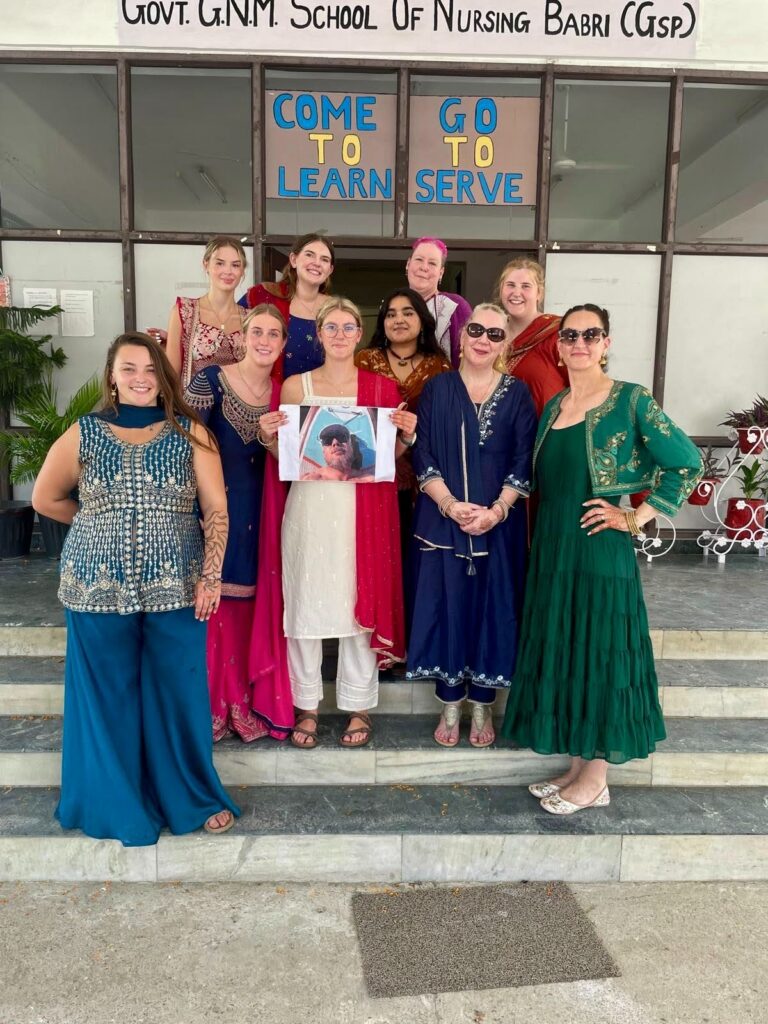
But alongside those differences was the hospitality we experienced. The people we met were welcoming and curious about who we were and why we had travelled to India. As we began meeting students, professors, and community members, the purpose of the trip started to feel much more real.
I had travelled to India expecting to help facilitate conversations about consent. It did not take long for me to realize that the experience was going to involve just as much listening as talking.
Consent as a Starting Point for Connection
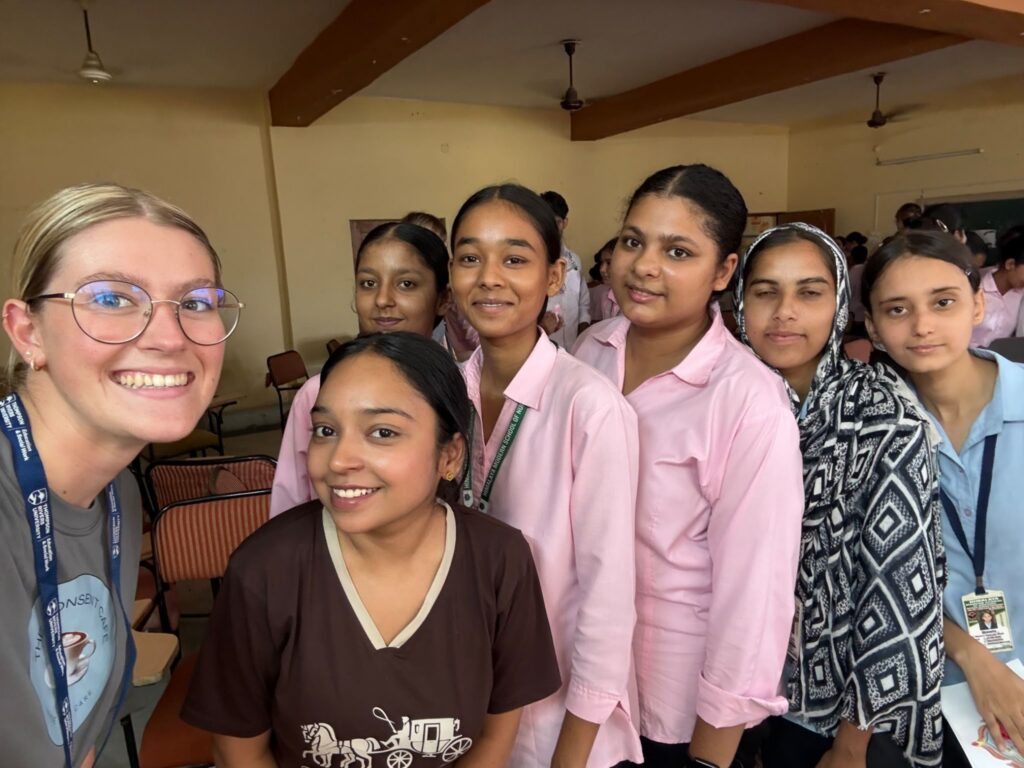
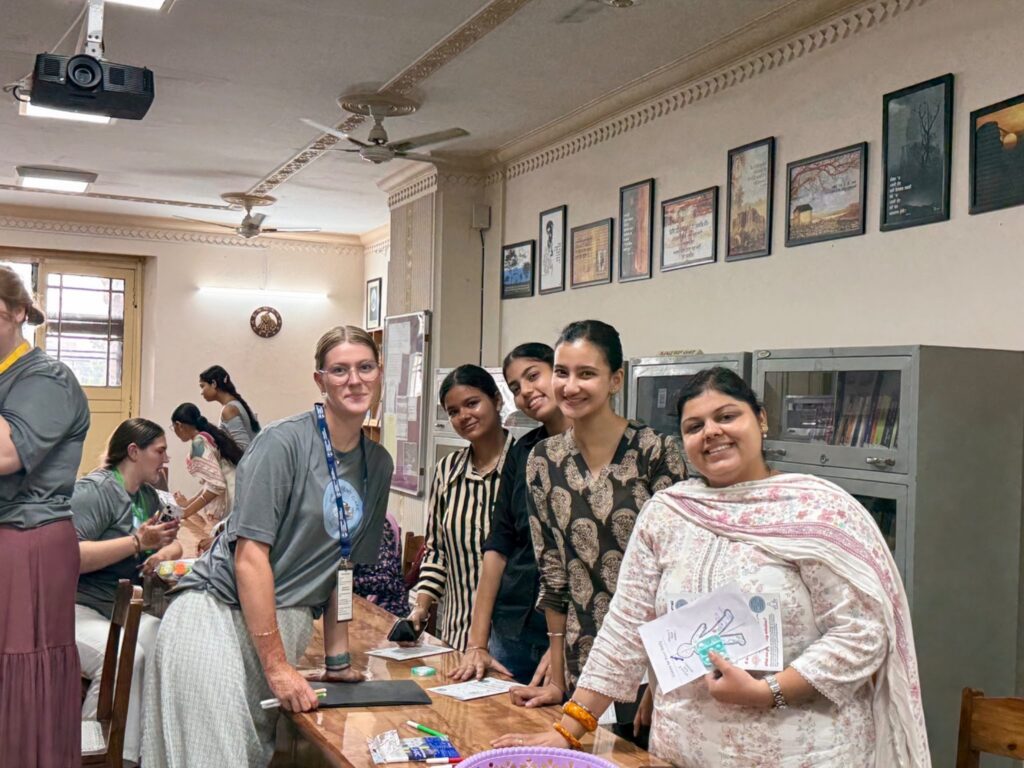
Our Consent Café workshops created spaces for conversations about consent, communication, boundaries, and relationships. Although we arrived with activities and information to share, the workshops were never one-sided.
The participants brought their own perspectives, experiences, and questions into every session.
Some of my favourite moments happened when a participant asked a question that I had not expected or interpreted an activity differently than I had. Those moments reminded me that we were not simply travelling from Canada to India to deliver information. We were creating opportunities to exchange ideas.
One of our activities, for example, prompted a professor to ask why we had chosen that particular exercise and what we hoped participants would take from it. Rather than simply completing the activity, they wanted to understand the reasoning behind it. That question stayed with me because it reminded me to think critically about the activities we use as facilitators. If we are asking people to participate in something, we should also understand why we are asking them to do it.
Those conversations became some of the most meaningful parts of the experience. Consent may have been the topic that brought us together, but the curiosity and conversation were what allowed us to connect.
When Participation Looks Different
Not every workshop unfolded the same way.
At some of the nursing colleges we visited, students were enthusiastic and conversations seemed to develop naturally. Participants asked questions, contributed ideas and engaged openly with the activities. Those sessions made facilitating feel relatively easy.
Other workshops challenged me much more.
Sometimes there was a language barrier. Sometimes the physical setup of a classroom made conversation difficult. In one setting, participants were seated in rows rather than in small groups facing one another, which changed the way we were able to interact. In other sessions, participants were quieter, distracted or hesitant to contribute.
Initially, I found some of those experiences frustrating. When you are facilitating a workshop, silence can make you wonder whether people are listening, whether the activity is working or whether you are connecting with anyone at all.
Over time, though, I began questioning my own definition of “engagement”.
Was someone disengaged simply because they were not speaking? Was I expecting participants to communicate in the same way that I would? What other factors might influence whether someone felt comfortable contributing to a conversation about consent?
Language, age, gender, classroom dynamics, cultural expectations and comfort with the subject could all affect participation. Once I began considering those factors, I stopped seeing quieter workshops simply as unsuccessful ones.
Instead, they became lessons in adaptation.
Cultural Humility in Practice
As a social work student, I had encountered the concept of cultural humility many times in the classroom. India gave me the opportunity to understand what it can look like outside of a textbook.
I arrived with my own experiences, assumptions and understanding of consent. Those perspectives were shaped by growing up and studying in Canada. The students we met brought perspectives shaped by their own families, communities, cultures and experiences.
Neither disappeared when we entered the classroom.
I learned that we could not simply take a Canadian approach to talking about consent and expect it to translate perfectly into another cultural context. Even when the underlying ideas were similar, the ways people communicated about them could be different.
That meant becoming comfortable with adjusting our approach. It meant listening when participants explained something differently than I would. It meant allowing conversations to develop in ways we had not planned.
Most importantly, it meant recognizing that travelling somewhere as a social work student did not make me an expert on the people who lived there.
I was there to share knowledge, but I was also there to receive it.
That distinction became one of the most important lessons of the entire field school. Meeting people where they are is a phase frequently used in social work. In India, I began to understand more deeply what that requires: listening before assuming, remaining curious and being willing to change your approach when the people in front of you need something different.
Relationships Beyond the Classroom
Some of the most valuable parts of the field school had nothing to do with a lesson plan.
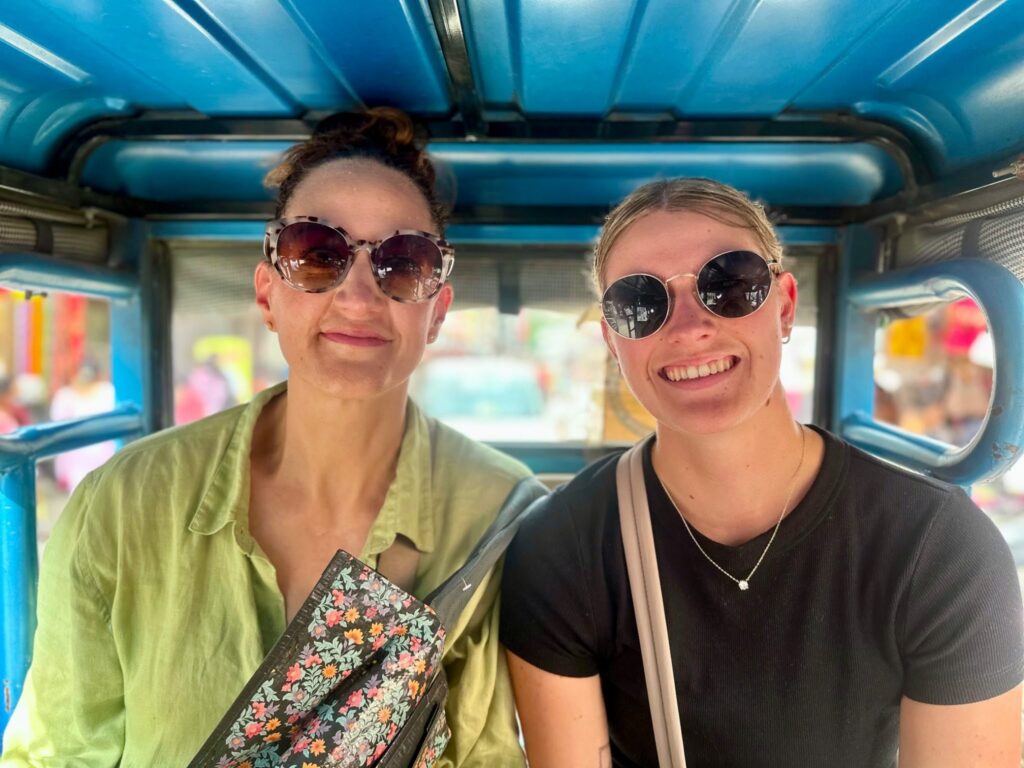
They happened over meals, while travelling between communities and schools, during conversations with students and professors, and in the time we spent getting to know the people who welcomed us.
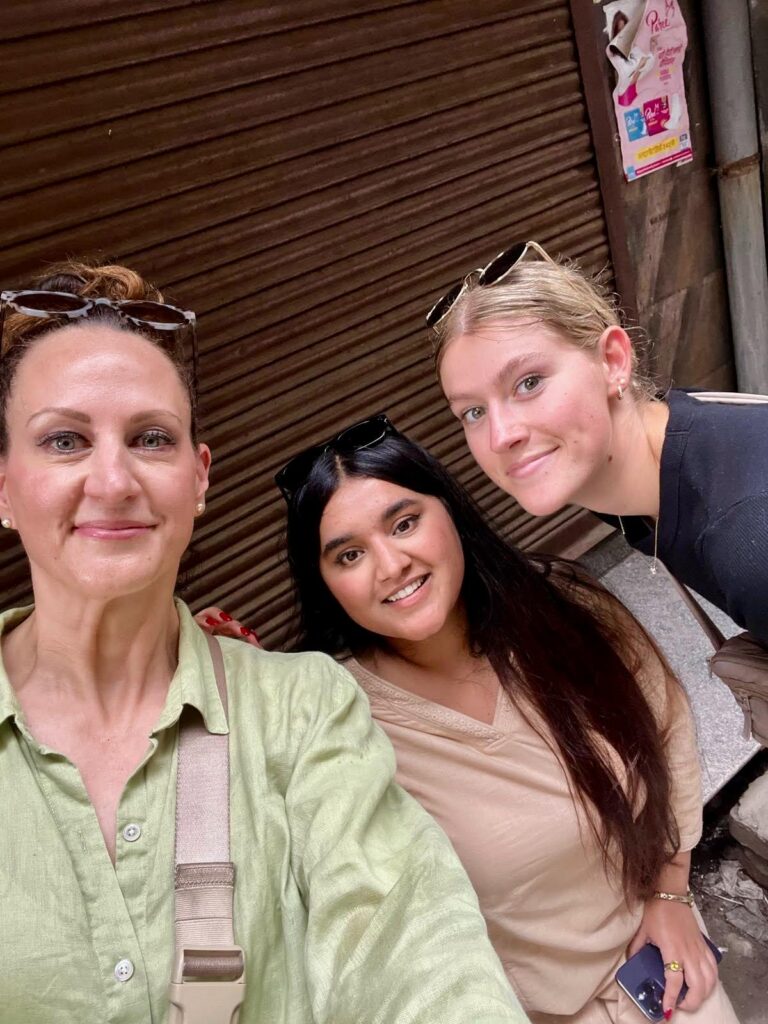
My experiences with Sabreet and her family, the students and professors we met, my classmates, Tanya and Chelsea, and the communities we visited all contributed to what I took away from India.
These relationships reminded me that international education does not happen only when someone is standing at the front of a classroom.
Sometimes learning happened during a workshop. Other times it happened during a conversation that had nothing to do with consent. Simply being in a different environment required me to observe, ask questions and recognize how much I did not know.
Those moments reinforced something fundamental to social work: relationships matter.
We can have activities, theories and carefully prepared lesson plans, but connections are often what makes meaningful conversations possible.
Growing Alongside the Experience
The field school also challenged me personally.
Travelling to India was a significant step outside of my comfort zone. Before leaving, I wondered how I would manage the travel, the time difference, unfamiliar environments and being so far away from home.
By the end of the experience, I had learned that I was capable of navigating much more uncertainty than I had expected.
That did not mean every moment was easy. There were times when workshops frustrated me. There were moments when I was tired or overwhelmed and needed time away from the group to recharge. Part of the experience was learning that personal growth does not always mean pushing yourself through discomfort. Sometimes it means recognizing what you need and giving yourself permission to step away.
Professionally, I returned with greater confidence in my ability to communicate across differences, facilitate challenging conversations and adapt when something does not go according to plan.
More importantly, I returned with a clearer understanding of the kind of social worker I hope to become.
What I Brought Home
I travelled to India expecting to talk about consent. I came home thinking about listening.
Teaching consent across cultures showed me that effective social work is not about arriving in a community with one way of thinking and expecting others to adopt it. It is about listening, adapting, building relationships and creating space for conversations that make sense for the people participating in them.
Consent was what brought us into those classrooms, but it became the starting point for something much larger.
The Consent Café gave me an opportunity to talk about boundaries, communication and respect with people thousands of kilometres from my own community. In return, the people I met taught me about cultural humility, adaptability, relationships and myself.
Those are lessons that I will carry forward through the rest of my social work education and into my future practice.
I went to India prepared to teach. One of the most valuable things I learned was how important it is to remain a student.